Home & Kitchen
How to buy cookware wholesale in Zimbabwe
7 min read
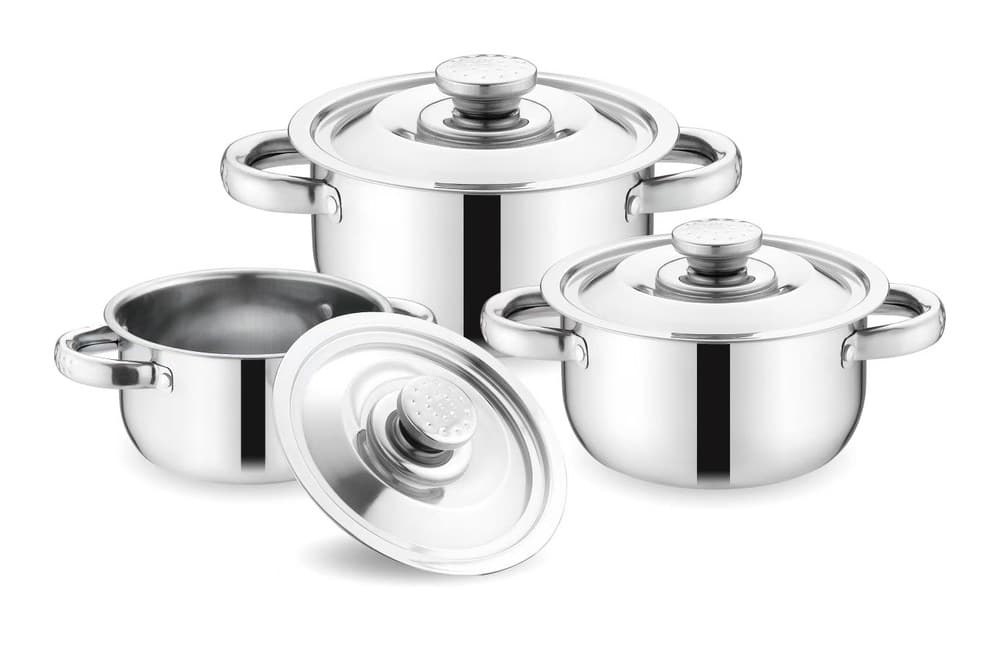
Cookware looks simple and is not. Two sets can look identical in a photo and land at very different costs once carton size, grade and breakage are counted. This is the short version of how to buy it without learning the hard way.
Start with the grade, not the price
Most stainless steel cookware in this market is 201 or 304 grade. 201 is the budget line: it is lighter, less corrosion-resistant and cheaper. 304 is the premium line: it holds up better to acidic food and daily washing.
Ask which grade is on the body and which grade is on the cooking surface. Some sets use a 201 body with a 304 inner liner. That is a legitimate product, but it should be labelled clearly. If a supplier cannot tell you the grade, do not put it on a retail shelf.
For volume, 201 sells. For the top shelf and repeat customers, 304 earns the margin. Stock both and label both honestly.
What sells in Harare
Three-piece and six-piece sets move fastest. A colour box with a photo of the set outsells a plain carton at the same landed cost, because the shopper can see what they are buying.
Bowls are the quiet volume line: 24–28cm mixing bowls and serving bowls. They stack, they break rarely, and they are easy to add to a mixed carton.
Steamer inserts and thermal carriers are add-on products. They do not lead an order, but they lift the average carton value when a retailer is already buying.
The real cost is the carton
A lower unit price with a bigger carton can cost more per unit landed. Check the carton dimensions, the number of sets per carton and the weight before you compare two quotes.
Cookware is bulky. Freight is often charged on volume, not weight. A set that nests tightly is worth more than a set that looks slightly better but ships half-empty.
Ask for the landed cost per set at your actual order quantity, not the factory unit price. That is the number your retail price has to survive.
MOQ and mixed cartons
Six sets per SKU is a realistic starting MOQ. It lets a retailer test a shape or a colour without committing to a container.
Mix colours within a carton where the factory allows it. Black, silver and one accent colour cover most of the demand. Seasonal colours are a second order, not a first order.
If you are buying several SKUs, ask whether they can share a carton or a pallet. Consolidation is where a small buyer gets close to a container price.
What to check before you pay
Lid fit: the lid should sit flat and not rock. Base flatness: a warped base will wobble on a flat surface. Handle rivets: they should be tight and not rotate. Edges: rolled, not sharp.
Check the finish under daylight, not only under factory lighting. Mirror polish hides small dents; a raking light does not.
Open one carton from the middle of the pallet, not the top. Damage usually shows up in the middle, where the compression is highest.
Sample first, then scale
Order one set per SKU at the wholesale price. The sample fee is usually credited against the first order above MOQ. Use the sample to check grade, weight, lid fit and packaging.
Once the sample passes, order one carton. Sell it through before you order a pallet. The market will tell you which shape and colour deserve depth faster than any catalogue.