Solar & Power
Solar lights for load-shedding: what to check before you buy
6 min read
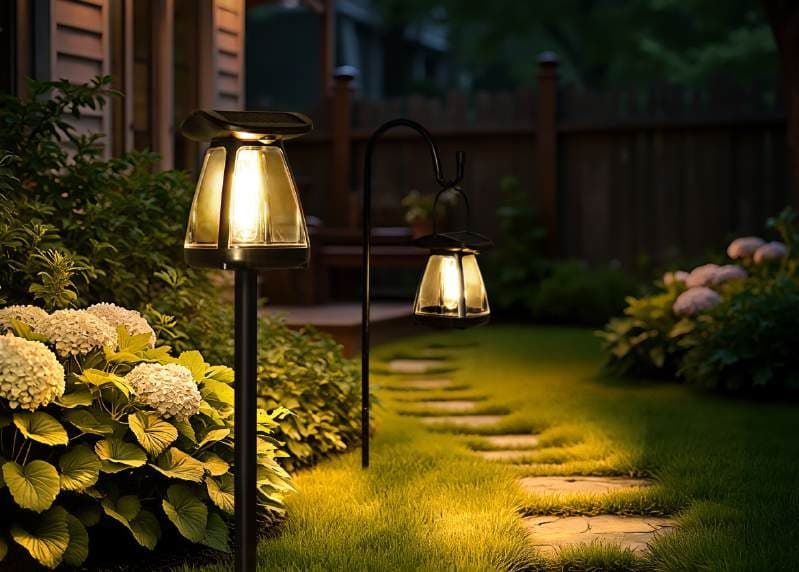
Load-shedding made solar lighting a staple, and it also filled the market with lights that look bright in a photo and fail after three rainy weeks. These are the checks that matter.
Lumens, not watts
Watts tell you what the panel or LED draws, not how bright the light is. Ask for lumens. A path light in the 100–300 lumen range is useful; a wall or security light needs more.
Beware of a product that claims high wattage with a tiny panel. The panel cannot recharge the battery fast enough, and the light dims after a few hours.
Ask for the runtime at full brightness, not the maximum runtime at the lowest setting.
Battery capacity and chemistry
A 1200mAh battery in a path light is normal. The number to check is the runtime: eight to ten hours on a full charge is a realistic target.
LiFePO4 cells last longer and handle heat better than cheap Li-ion cells. For a product that sits in the sun all day, chemistry matters.
Ask whether the battery is replaceable. A light with a sealed, non-replaceable cell has a shorter commercial life.
IP rating
Outdoor lines should be IP65 or higher. IP44 is splash-resistant, not rain-proof. IP20 is indoor only.
Check the seal around the panel and the cable entry. Water enters at the joints, not through the plastic.
For coastal or dusty markets, check the finish on the screws and brackets. Cheap plating fails before the electronics do.
Panel and charging
A larger panel charges faster and copes better with cloudy days. Ask for the panel wattage and the charging time.
The installation angle matters as much as the panel. A light fixed flat under a roof overhang will not charge. Sell the bracket with the light.
In the rainy season, runtime drops. Set customer expectations: a solar light is not a grid light.
Warranty and replacements
Twelve months on the light and six months on the battery is a workable split. Confirm what the warranty covers: water damage, battery degradation and LED failure are different claims.
Ask how dead-on-arrival units are handled. A replacement on the next order is more useful than a credit note that takes a month.
Keep one spare unit per carton for testing. It is cheaper than a return.
What sells
Path lights and wall lights are the volume lines. Lanterns and decorative lights sell in gift and home channels. Kits with a panel, light and cable sell to buyers who do not want to assemble a system.
Start with two or three shapes, not ten. Let the sell-through tell you which shape to deepen.